🏀 What Coaches Kept Coming Back To
|
Exploring basketball's best ideas, strategies, and coaches around the world Happy Sunday! Welcome to all the newest subscribers from around the world! ICYMI: Last week, we wrapped up our SoCal Summit clinic releases with Mike Magpayo on using analytics and feedback to reinforce what matters, and Tim Fanning on building defensive identity through clear rules and habits. Read the newsletter HERE. This Week at a Glance:🔒 SGTV: Offensive Intelligence Report {April-June} 🧪 The Practice Lab: What Survived the Summer 🎧 Slappin' Glass Podcast: Nevada Smith | Siena SG Intelligence Report | Q3 2026What are coaches actually trying to solve right now? Each quarter, we look past the newest SGTV releases and focus on what coaches keep coming back to, the concepts being rewatched, shared, and revisited long after they first go live. Those repeat views give us a signal. They show where coaches are still searching for answers, where coverages are evolving, and which ideas continue to create new questions. This quarter, four themes stood out: Hedge & Plug, Late-Game Defense, Randomized Offense, and ICE Solutions. What We’re Seeing
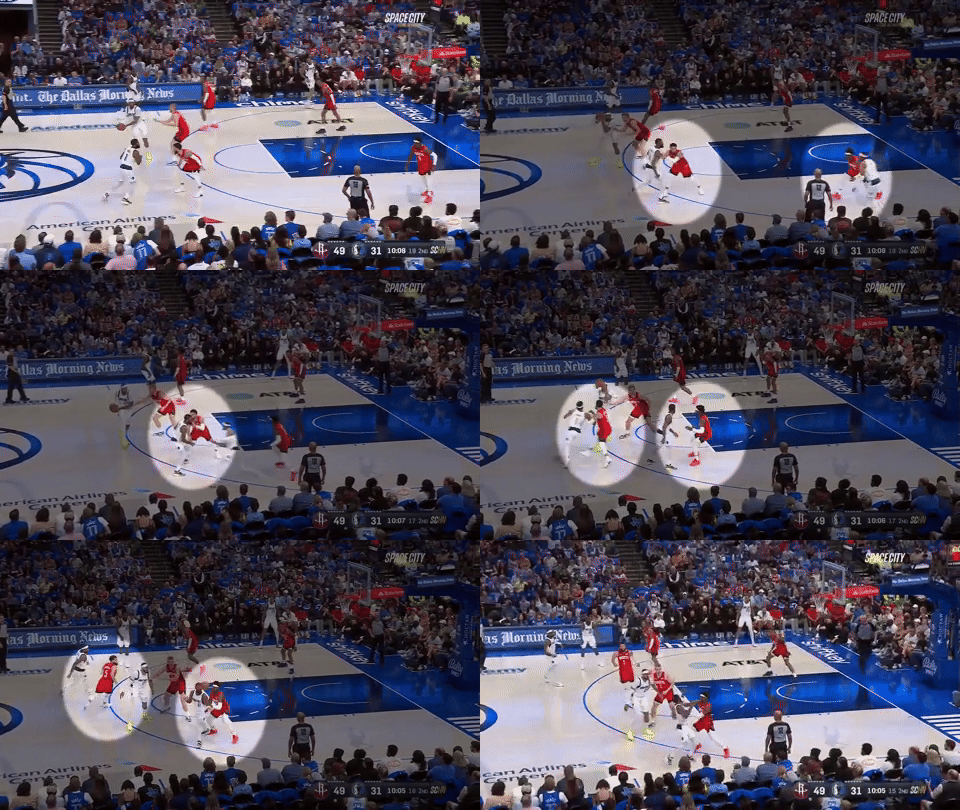
*Note: Each video's accompanying newsletter links to the "SG Coaches Corner". If you have not already joined the Coaches Corner, please check your initial welcome email for the invitation. Can't find it? Feel free to reach out to us, and we will promptly resend the invite. Hedge & PlugThe Signal: Winning after the coverage has done its jobHedge & Plug has become a recurring thread in our film study, but the most interesting development this quarter was what happened after the initial coverage contained the ball. The videos coaches kept returning to focused on the next layer: jumping on the pickup, rescreening the coverage big, attacking the X-out, and playing against the micro closeouts created behind the action. The larger question: Once the defense has contained the first advantage, how does the offense create the next one? WATCH: Jump on the Pickup & Hand Technique Defensive Lens: taking away the most dangerous next pass and keeping the coverage from creating unnecessary rotations. This is something we also spoke about on the podcast with G-League Coach of the Year, Vitor Galvani {🎙️}. 🔒 SG ✚ DEEP DIVE: Our initial breakdown on the coverage and rotations behind the ballscreen. READ: Newsletter WATCH: Button Hook Rescreen - Attacking the "Hedge & Plug" Offensive Lens: forcing the coverage big to solve a second action before fully recovering from the first. PAIR WITH: Creating a mismatch advantage against the automatic X-out in the Spain ballscreen, plus using a well-timed 4-man cut to change the shape of the offense to punish the coverage. 🔒 SG ✚ DEEP DIVE: Another look at how offenses are countering the "Hedge & Plug" ballscreen coverage by attacking the guard’s release to plug the short roll, coupled with a well-timed Gortat screen. READ: Newsletter WATCH: Attacking the Micro Closeout Development Lens: training the smaller advantages that appear once the initial coverage has been broken. READ: Newsletter Getting a Late-Game StopThe Signal: Switching is only as good as what happens nextLate-game switching removes some immediate problems, but it often creates another one: a post mismatch, unfavorable perimeter matchup, or difficult off-ball exchange. The material coaches revisited most centered on the solutions behind the switch, connected switching, triple switches, trapping mismatches, and fronting the post. The larger question: Can you switch the action without simply moving the advantage somewhere else? WATCH: Switching Tough Actions - The Details Behind Connected Switching "In this Film Room video Coach Charles Klask discusses the details behind building a defense that is physical, connected, and hard to script against, covering when to switch, how to communicate it, and the details that make it hold up." 🔒 PAIR WITH: An opportunistic triple switch out of a post mismatch when an opponent attempts to attack through the high post flash. 🔒 SG ✚ DEEP DIVE: A couple of our favorite trapping strategies to solve a perimeter mismatch post-switch with a "Hit" from the loaded side or a "Hit" on the roll. 🔒 ✚ SG DEEP DIVE: Protecting a post mismatch with a full front and aggressive high post deny. READ: Newsletter
Getting RandomThe Signal: Familiar actions, less predictable arrival pointsRandomized offense does not necessarily require more actions. Sometimes it means allowing the same action to emerge from different locations, timings, and preceding triggers. The Horns Flare material is a prime example. The action can appear first side, second side, or late clock while connecting with ghosts, ball screens, flares, and immediate rescreens. The larger question: How do you make something your players know extremely well harder for even the best defenses to anticipate or scout? WATCH: Offset Horns Flare - Randomizing Flares "This breakdown of Hood College looks at the versatility of Horns Flare as more than a set action. Used on the first side, second side, or as a late clock retrigger, the concept connects ballscreens, ghosts, and flares to organize three players into action and force the defense to solve multiple coverages in sequence." 🔒 PAIR WITH: Punish defenses attempting to go under the Flare Screen with an immediate rescreen. 🔒 SG ✚ DEEP DIVE: The use of "Patient Pivots" and off ball cutting on high paint penetration to create randomized "Cross Court" DHO opportunities. READ: Newsletter Breaking the ICEThe Signal: Sometimes the best counter is to remove the screenRather than repeatedly trying to beat ICE with the ballhandler, some of the most interesting solutions change the geometry before the coverage can settle. A rim sprint by the screener, a wide reject, or screening away forces the defense to solve a different problem than the one it prepared for. The larger question: Can you punish the coverage without actually playing into the coverage every time? WATCH: ICE Coverage Solutions - Rim Sprints "A simple counter to ICE built around the screener aborting the action and sprinting to the rim. The resulting rim pressure puts the coverage big in a bind, creating opportunities for lobs, drives, and spray-outs." 🔒 SG ✚ DEEP DIVE: Coach Moncho Fernández’s wide reject attack and screen away against outer third ICE coverages. READ: Newsletter What We’ll Be Watching NextThe interesting part of these reports is seeing where one problem leads to the next. Hedge & Plug is increasingly becoming a conversation about second advantages and recovery closeouts. Switching is becoming a conversation about mismatch management. Random offense is pushing toward how teams create unpredictability without sacrificing clarity. Those are a few of the threads we’ll continue following as the season kicks off here in the Fall. If there’s a problem you’re working through that you think belongs on our radar, reply and let us know. What Survived the Summer: 5 Lessons From the Gym — Part OneThoughts from Drew Dunlop in building The Practice LabFor the last few months, I’ve shared one Brick, one Takeaway, and one Tinker each week. Individually, they’ve been small observations from the gym. Looking back across the summer, though, the same lessons kept resurfacing. Different players. Different problems. Different environments. But a handful of ideas survived. As we head into the season, I wanted to pull those together with some of the edges I’m currently exploring. Think of these as a menu for coaches to test within their own players, systems, and environments. 1. Context Beats ChoreographyOne of my biggest reminders came while working with a professional player on pull-up threes out of pick-and-roll. We initially tried cleaning up his footwork on-air. The more we emphasized the movement, the more he thought about it. So we added a screener, two defenders, changing coverages and an eight-second window to create an advantage three. The footwork we were trying to manufacture started appearing on its own. That lesson kept resurfacing. When we wanted players playing off two feet, changing the starting relationship between offense and defense created better solutions than simply rewarding two-foot finishes. When exploring stride stops, removing a step produced more variability because players became more attuned to the defender. The takeaway: Before teaching the solution better, make sure you're presenting the problem well. 2. Train Advantages, Not Just MovesMicro closeouts became a major theme. Most advantages aren't huge. They're a step ahead, an exposed hip, a pocket of space or a defender trying to reconnect. So the question became: Can players recognize an advantage early enough to use, maintain or extend it before it disappears? This changed how I thought about starting positions. On the catch. Live dribble. Stop or pivot. Defender recovering laterally, backward, or up the line. The takeaway: Instead of practicing a move against a predictable picture, change the picture and let players determine what it affords. 3. Don't Just Pickup Information. Manipulate It.Basketball is an ongoing exchange of information. That makes deception a skill on both sides of the ball. This summer we shortened eyes sell lies to simply, sell lies. Eyes. Feet. Ball. Body. Pace. Position. When we gave players a defender and asked them to make a pull-up look like a drive, all sorts of solutions emerged. The same principle showed up with one-handed passing. Keeping the ball live longer preserved more options and forced defenders to delay their decisions. The takeaway: Don't only train players to perceive information. Help them learn how to manipulate the information their opponent perceives. 4. Spacing Isn't Where You StandDuring a 3v3 possession, our ballhandler picked up their dribble under pressure. The other two players were technically in the correct spots. The problem? Neither could receive the ball. They were geometrically spaced but functionally unavailable. That changed the question for me from: Are you in the right spot? To can the ball find you? Spacing is relational. Players have to create windows through movement, timing, contact, deception and positioning. That connects directly to something I'm thinking about more going into the season: the value of the weak side. Cutting. Screening. Re-spacing. Relocating. Occupying help. Creating passing windows. The takeaway: Most players spend far more time without the ball than with it. Our development environments should probably reflect that. 5. Sometimes the Best Constraint Is a Better CueI tried helping a shooter calibrate misses by subtracting points for hitting the right or left side of the rim. It made sense on paper. But in practice, it created frustration and noise. We simplified it: earn points for swishes and BRADs. Same intention. Clearer feedback. Better response. Before adding another rule, ask: Could I simply change what the player is searching for? The takeaway: I've become increasingly convinced that clarity is one of the most underrated constraints available to a coach. Next week, I’ll get into what happens after a constraint has done its job, how we can make outcomes matter more, and a few of the edges I’m chasing as we head into the season. Together with NABC Stay Connected to the Coaching ProfessionThe season moves fast. NABC membership keeps you connected to the coaches, ideas, events and issues shaping the profession. More than 5,000 coaches across every level are part of the NABC, with member access to the NABC Convention, regional clinics, mentoring, exclusive awards, discounts and professional development opportunities throughout the year. Just as importantly, membership helps strengthen the collective voice of coaches on the issues affecting the game and the profession. If coaching is your profession, the NABC should be part of it. Renew your membership — or join for the first time — at NABC.com/membership. Slappin' Glass Podcast🎙 Nevada Smith on "25" Speed, Confusion Zones, and Crashing Five | SienaSiena University head coach Nevada Smith joins the Slappin’ Glass Podcast to discuss the difference between speed and pace, the details behind “25 Speed,” and how his teams work to create advantages within the first five seconds of a possession. We also dive into offensive rebounding, and PNR reads during Start, Sub, or Sit. Here are 7 lessons from the show:
Together with Hudl Faster from Film to ScoutThe season is live. How long does it take your staff to put together a full scout? How many platforms are you bouncing between to do it? The programs running Hudl - Sportscode, Instat, Fastmodel all connected - aren't asking those questions. They're getting to the clips that matter faster and spending that time actually coaching. Film, data, and scouting in one place. Fewer tabs, faster prep. Learn more at hudl.com/slappinglass Subscribers to Slappin' Glass can also directly email Winston Jones of Hudl at winston.jones@hudl.com. Interesting Reads📚 Accountability Is Leadership's Greatest Weakness Holding people accountable is uncomfortable, but learning how to improve leadership skills often begins with setting clear expectations for performance. Defining exceptional performance and expectations implicitly means telling some people they aren't meeting the standard. It also demands disciplined specificity, something that does not always come naturally to leaders more accustomed to operating at the level of vision and strategy. 📚 How Winning Programs Quietly Drift Away from What Made Them Successful 5. Pressure Replaces Joy Ironically, success itself can create drift. Coaches observed that sustained success often creates pressure rather than confidence. Athletes become tight, fearful, and unwilling to take risks. The joy that once fueled performance is replaced by fear of letting others down. One coach described it as “a self induced pressure, letting down me, their parents, teammates, grandparents.” Quote of the Week
“As long as you have certain desires about how it ought to be you can’t see how it is.” - Ram Dass
Thank you for reading and have a great week coaching, Dan, Pat, Eric, and Drew info@slappinglass.com |
Slappin' Glass
Exploring basketball's best ideas, strategies, and coaches from around the world.
Exploring basketball's best ideas, strategies, and coaches around the world Happy Sunday! Welcome to all the newest subscribers from around the world! ICYMI: Last week, we featured two different approaches to pace and offensive organization. Matt Majkrzak on scripting rotations, pace, and play calls. Kyle Bossier on Cal Poly’s Beautiful Game built around pace, space, connection, and player freedom. Read the newsletter HERE. This Week at a Glance: 🔒 SG Plus Content: Mike Magpayo and Tim...
Exploring basketball's best ideas, strategies, and coaches around the world Happy Sunday! Welcome to all the newest subscribers from around the world! ICYMI: Last week, we revisited Martin Schiller’s approach to building PNR defense from the ball outward and Alex Pribble’s framework for aligning roles, pace, and defensive identity with the roster. Read our recap HERE. This Week at a Glance: 🔒 SG Plus Content: Matt Majkrzak & Kyle Bossier Socal Coaches Summit Clinic Release! 🎧 Slappin' Glass...
Exploring basketball's best ideas, strategies, and coaches around the world Happy Sunday! Welcome to all the newest subscribers from around the world! ICYMI: Last week, Last week we looked at how offenses can attack the short, awkward recoveries we’re calling Micro Closeouts and how to train players to read the defender’s angle, momentum, and space in those moments. Read the newsletter HERE. This Week at a Glance: 🔒 SG Plus Content: Martin Schiller & Alex Pribble Socal Coaches Summit Clinic...