🏀 So Nice, They Screened Him Twice
|
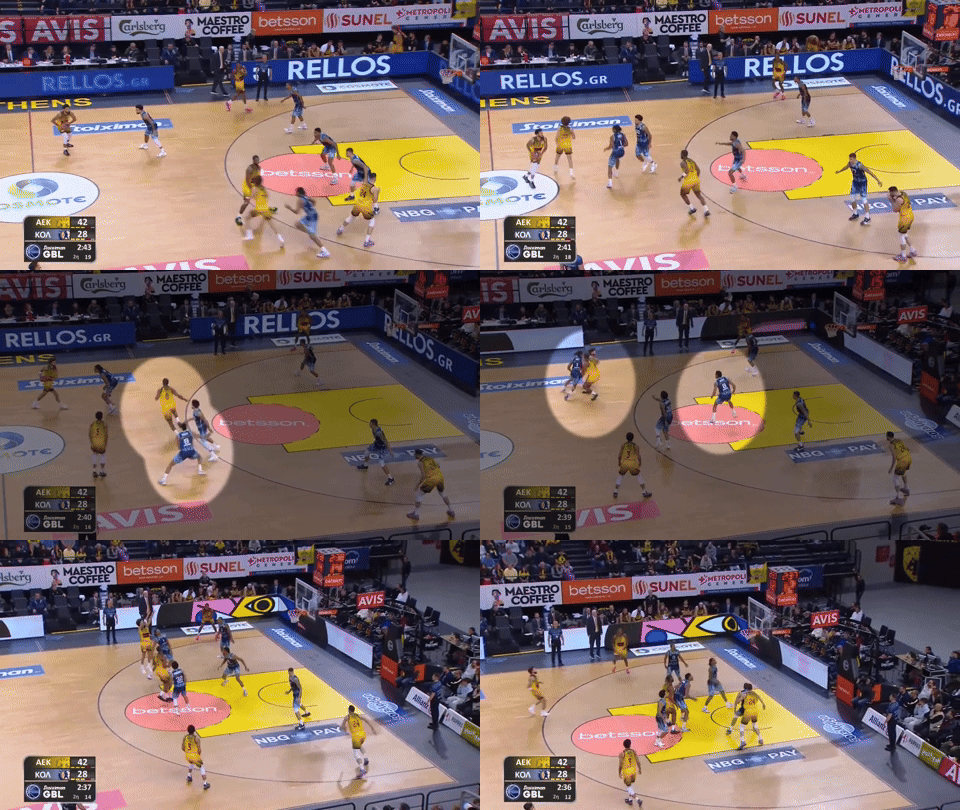
Exploring basketball's best ideas, strategies, and coaches around the world Happy Sunday! Welcome to all the newest subscribers from around the world! ICYMI: Last week, Last week we previewed each speaker at the SG SoCal Summit, revisiting a few of their ideas and highlighting what we’ll be listening for when they take the floor. Read the newsletter HERE. This Week at a Glance:🔒 SG Plus Content: Button Hook Rescreen - Attacking "Hedge & Plug" 🎧 Slappin' Glass Podcast: Charles Klask 🔑 The Practice Lab: Score Stop 🥇 Best of the Week: Dribble Weaves But first... A quick thank you to everyone who joined us at the SG SoCal Coaches Summit yesterday. We’re grateful to all the coaches who made the trip, and especially to our six presenters for sharing their time, ideas, and teaching with the room. For those who couldn’t make it, or want to revisit the sessions, we’ll be releasing the full Summit replays on SGTV over the next few weeks. More soon. Button Hook RescreenAs the "Hedge & Plug" ballscreen coverage continues to grow in popularity, we remain vigilant in finding the unique ways teams look to attack it. Today, we're looking at a screening strategy we're calling the Button Hook Rescreen, where the screener briefly short rolls out of the initial screen before turning back uphill toward the ball to set a second rescreen. The movement stresses the mobility of the coverage big while creating a cleaner screening angle on the second action.
Second Screen SuccessAgainst a showing ballscreen coverage, a second screen can be an effective way to break the coverage. The challenge is that coordinating the timing and creating enough space through the pressure for the second screen, or rescreen, can be stickier than expected. One scripted action we’ve highlighted before is using the same screener for two consecutive outer-third ballscreens. By slipping out of the first screen and hooking back into a second {🔒}, the offense can open up space for the ballhandler to attack off the catch against a defense scrambling to apply its preferred coverage.
Zooming In: On the first outer-third ballscreen, the hedge pulls the big well outside the 3-point line. As the screener slips out and hooks back into the next outer-third screen, the big is no longer in position to show again or influence the screening angle. The defense is now forced into a much more passive coverage than originally intended. But there’s another way to get to the second screen, without needing the same space or orchestration. Arriving AloneWith the Button Hook Rescreen, the screener briefly rolls out of the first screen before turning back uphill into another. That simple change of direction creates a difficult mobility problem for the coverage big. After showing toward half court, the big must recover back toward the rim before immediately being asked to get back out and defend another screen. That often allows the screener to arrive alone on the rescreen without the same defensive steer or pressure that existed on the first action. The result can be a flatter second screen, a cleaner angle for the screener, and more freedom for the ballhandler to attack either direction. And that’s where the action begins to create even more problems for Hedge & Plug. In the full breakdown, we look at how the Plug itself contributes to the success of the rescreen, why late attempts to reapply the hedge can reopen the short roll, and how adding a boomerang pass can further stress the coverage and its tag responsibilities. 🔐 Become an SG+ Members for access to the complete newsletter and the full Button Hook Rescreen breakdown on SGTV! The Learning LoopThoughts from Drew Dunlop in building The Practice LabSometimes you don’t need another constraint. You just need to make the outcome matter more. BrickThis week, we only had five players in our college/pro group, so I structured a 2v2 transition Play It Down. The 2v2 started with a drag screen. The screener could set, ghost, or flip it; the ballhandler could use or reject. The offense couldn’t use the corners and had to play in the above-the-break runway. Make or miss, we flowed into 1v1. The offensive player started on a live dribble inside the 3pt line with the defender a few steps away. Once the defender moved forward, the offensive player had to get both feet outside the line before attacking on a four-second clock. I liked the problems, but after a few minutes the group flattened out. Rather than change the drill, I changed the scoring. We switched to Score Stop. Score and immediately respace for an uncontested three. Get a stop and earn the same shot. Same problem. More at stake. TakeawayAdding one more opportunity completely changed the intent. Offensively, players were less willing to settle for tough shots because a score earned another shot. Defensively, there was more urgency, more resistance, and multiple efforts because a stop meant getting the ball. It reinforced something I keep coming back to with scoring systems: Sometimes you don’t need another constraint. You just need to make the outcome matter more. TinkerNow I’m thinking about where else we can use it. We started using Score Stop in our Play It Downs, especially with odd numbers and individual scoring. Suddenly, an ISO stop mattered more because it created another chance to score. Could we carry it across multiple bursts of 1v1? Could a stop unlock a transition possession? Could winning one problem earn the chance to solve the next? Instead of every possession standing alone, what you do now determines what you earn next. That’s what I want to keep tinkering with. Together with Hudl Preparation Wins Before Tip-OffThe staffs that hit the ground running in preseason are usually the ones that prepared their systems before players arrived. With Sportscode and FastModel already dialed in, film, playbooks, and scouting workflows are ready from day one—not still being built in week two. What you set up in August determines how efficiently you can teach, adjust, and prepare once the season begins. Hudl helps make sure the work is ready before the real work starts. Learn more at hudl.com/slappinglass Subscribers to Slappin' Glass can also directly email Winston Jones of Hudl at winston.jones@hudl.com. 🎙8 Lessons from Charles KlaskThere was a lot to pull from in this conversation with current University of Washington Assistant, and former NBA Champion Coach with the Denver Nuggets, Charles Klask, but what stood out most was how often he came back to a central idea: freedom only works when players understand what matters. Whether discussing flow offense, matchup hunting, coverage solutions, or switching, Klask consistently connected scheme back to personnel, decision-making, and the ability to recognize what the possession is asking for. Here are eight ideas that shown through:
Listen to the full conversation now on the Slappin’ Glass Podcast.
Together with the NABC If you’re a basketball coach, you belong in the NABC community!The NABC is the leading professional development and advocacy organization for coaches, serving over 5,000 members across all levels of basketball. Why join? Members gain access to the NABC Convention and regional clinics, exclusive awards and mentoring opportunities, valuable discounts, and a voice in shaping the future of basketball. If you're serious about growing as a coach and staying connected to the game’s biggest conversations, this is where you belong. Become a member today and make your impact as a Guardian of the Game. Learn more HERE. Tactical📺 Single Entry - Weave • RIP Screen "Using the dribble weave to lift the offense above the foul line, removing any help at the rim on the RIP screen." 🔒 Pair With: Following up a dribble weave with a roll-replace ballscreen to confuse tag responsiblities. 🔒 Pair With: Create confusion and distort the defense`s shape by running a top weave before flowing directly into the horns screens. 🔒 SG Plus Content: Our defensive breakdown on denying DHOs and switching to ICE on guard to guard hand-offs.
Interesting Reads📚 Don Nelson was an NBA Original Nelson never seemed rushed as he gave what amounted to a masterclass heading toward midnight on the whys and wherefores of NBA basketball. One night he would explain the intricacies of the league’s illegal defense rules, based on intimate knowledge he gleaned from helping to write those rules with the competition committee. (So what if that was like letting a safecracker choose the bank vault’s combination, it worked for Nellie and his Bucks.) Another time he might explain his reasons for bringing in old war-horse point guards such as Norm Van Lier, Tiny Archibald or Charlie Criss. Or dissect the wide-equals-tall specialness of Philadelphia rookie Charles Barkley. Strategies don’t deliver outcomes – that’s the reality. My work has taught me that you cannot overcome biases by simply trying to be more rational. The optimal path is to create processes that prevent us from succumbing to them. 📚 ‘Outstanding Leader’ Fleming Backed to Find Calm Among the Chaos for England “He was just very calm all the time, very unruffled,” Bicknell says of Fleming. “He worked out the game really well, worked out people very well, but overall he was just calm, even in the hottest of moments. Everyone trusted him to be on everything. I think in moments when things weren’t going well, there was a reflection from him that everything was still all right: just be patient, stay calm, and it will come right as long as we’re doing the right things. He was just a really good man and the sort of person you felt like you wanted to play for..." Quote of the Week
“Premature optimization is the root of all evil.”- Donald Knuth
Thank you for reading and have a great week coaching, Dan, Pat, Eric, and Drew info@slappinglass.com |


Slappin' Glass
Exploring basketball's best ideas, strategies, and coaches from around the world.
Exploring basketball's best ideas, strategies, and coaches around the world Happy Sunday! Welcome to all the newest subscribers from around the world! ICYMI: Last week, we released our third quarter SG Intelligence Report, looking at the concepts coaches kept coming back to across SG, from Hedge & Plug and late-game defense to randomized offense and ICE solutions, and what those repeat views might tell us about the problems coaches are trying to solve right now. Read the report HERE. This...
Exploring basketball's best ideas, strategies, and coaches around the world Happy Sunday! Welcome to all the newest subscribers from around the world! ICYMI: Last week, we wrapped up our SoCal Summit clinic releases with Mike Magpayo on using analytics and feedback to reinforce what matters, and Tim Fanning on building defensive identity through clear rules and habits. Read the newsletter HERE. This Week at a Glance: 🔒 SGTV: Offensive Intelligence Report {April-June} 🧪 The Practice Lab: What...
Exploring basketball's best ideas, strategies, and coaches around the world Happy Sunday! Welcome to all the newest subscribers from around the world! ICYMI: Last week, we featured two different approaches to pace and offensive organization. Matt Majkrzak on scripting rotations, pace, and play calls. Kyle Bossier on Cal Poly’s Beautiful Game built around pace, space, connection, and player freedom. Read the newsletter HERE. This Week at a Glance: 🔒 SG Plus Content: Mike Magpayo and Tim...