🏀 The Head of the Snake
|
Exploring basketball's best ideas, strategies, and coaches around the world Happy Sunday! Welcome to all the newest subscribers from around the world! ICYMI: Last week, we looked at a subtle ballscreening adjustment to create tougher overs and an easier pocket pass against the drop coverage. Read the full newsletter HERE. This Week at a Glance:🔒 SG Plus Content: Defending the Snake Dribble - Peel Switching 🎧 Slappin' Glass Podcast: Evan Miyakawa 📣 Hudl Instat & Dr. Dish 🥇 Best of the Week: Skip DHO's & Veer Screens 📚 Interesting Reads But first... Got a coaching question? Ask us—now’s the time!
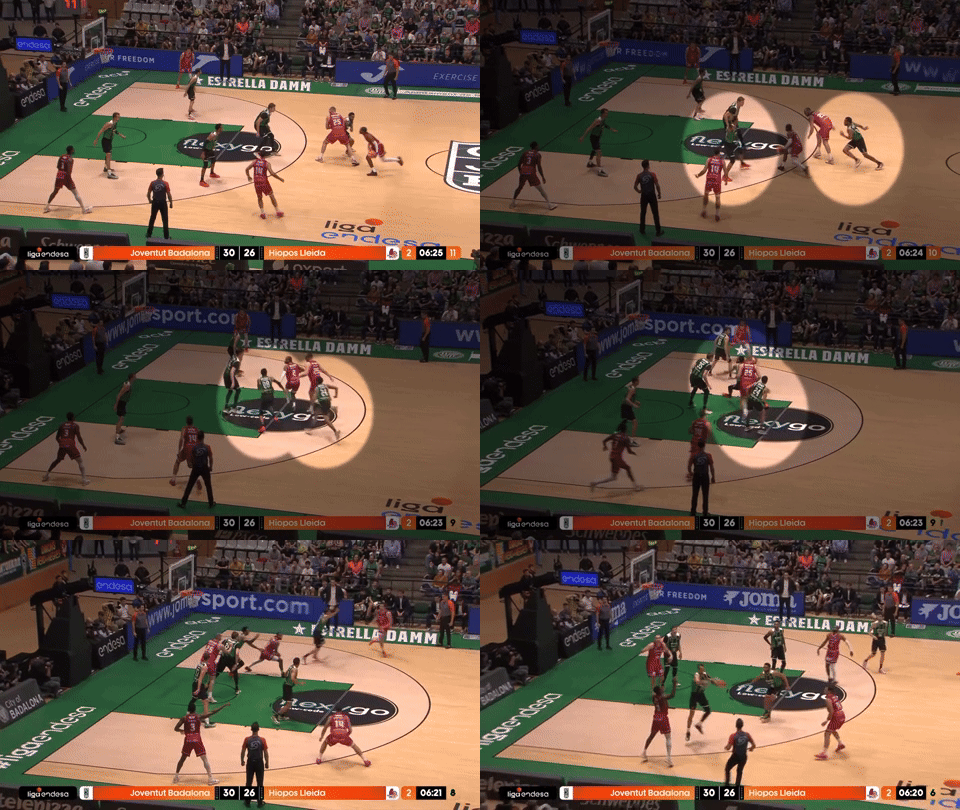
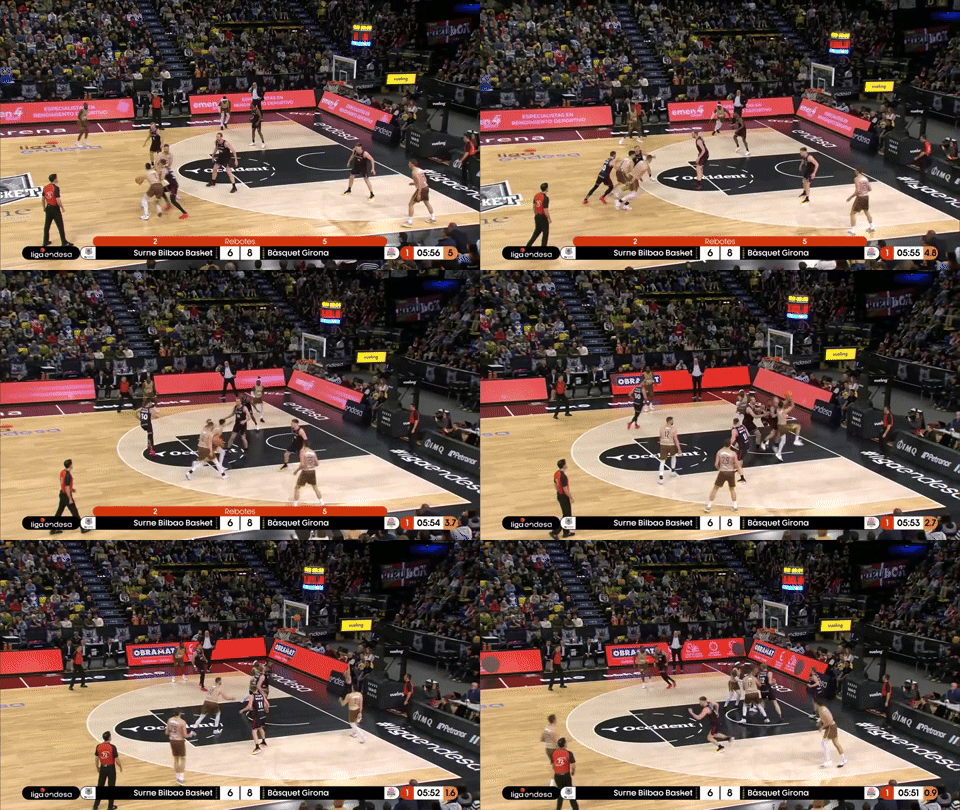
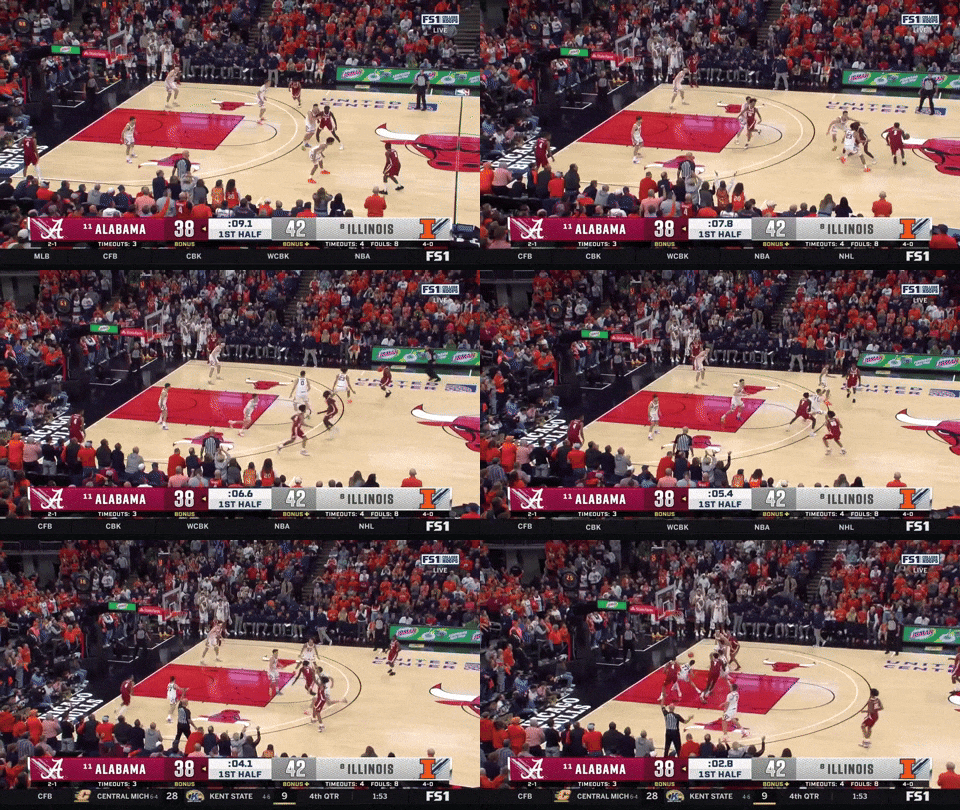
The Head of the SnakeAs basketball strategy continues to evolve, there is a constant push and pull between defensive innovation and the offensive responses that follow. Sometimes that response shows up as a new set or system. More often, it is an individual skill or subtle technique that punches back against those savvy developments. Drop PNR coverage has anchored defensive schemes across nearly every level of the game for more than a decade. As offenses have grown more familiar with the coverage, they have learned to manipulate the space the dropped big concedes, finding ways to consistently re-enter the paint, engage the big, and force the defense into secondary decisions. One of the most effective tools at punishing a drop coverage is the snake dribble. Zooming In: The snake dribble has the ballhandler come off the screen and immediately cross back into the space in front of the screener, often toward the middle of the floor, creating added separation between the recovering on ball defender and forcing the big to defend more space on the floor. This type of attack is often paired with a hostage dribble, keeping the on ball defender on the ballhandler’s hip. That combination creates natural opportunities for a Gortat screen, as the roller can get downhill and then seal their defender to one side of the rim, eliminating the defender's ability to help at the rim. The snake dribble has become one of the most common ways offenses counter drop coverage. But there is a solution, and that is what we will be digging into today. If you are struggling to defend the snake dribble while playing drop, consider incorporating a peel switch. Deploying The PeelIn drop coverage, there is always a brief moment of advantage for the ballhandler as they come off the screen, before the on ball defender can recover. The snake dribble is designed to use and extend that advantage. One way the defense can counter it is by involving a third defender, positioned in the gap, to switch onto the ball.
Zooming In: Sending the peel switch is most easily accomplished by bringing the top defender from the full side of the floor onto the ball, with the on ball defender peeling off into rotation. In today’s video breakdown, this peel switch is shown as readily accessible from either side of the floor, whether the ballhandler is attacking toward the full side or snaking back into it. This approach may run counter to the philosophy of some coaches who play drop, where the underlying goal is to defend the ballscreen two on two and avoid sending help. Ideally, that remains the case. But depending on your level and the quality of the guards you are facing, you may already be shrinking the floor within your drop coverage, making this a natural next step rather than a departure from your core principles. The peel switch also does not need to occur on every possession. The top defender on the full side begins in a gap help position without fully committing to the switch, waiting to see how the on ball defender navigates the screen. If the defender is able to work over and recover into a solid position, the gap defender stays home. If not, they can call the peel and switch onto the ball. When a ballhandler uses the snake dribble, they are often in an attacking mindset, focused on reading the big and accessing a path to the rim or space for a pull up. In those moments, they are not always scanning the entire floor or prepared to immediately punish help with a kick out. Getting Back to NeutralIn a sense, the peel switch can still be considered in solving the ballscreen two on two. In environments where an elite scoring guard is the primary threat, the priority becomes eliminating space as quickly as possible and getting a defender neutral on the ball. The peel switch accomplishes that without committing two defenders onto the ball.
Zooming In: As the ballhandler is absorbed by the peel defender, the dropped big is relieved of the responsibility to contain the dribble and can remain attached to the roller. That removes the pocket pass and lob while keeping the coverage intact. Because many offenses pair their most dangerous ballhandler with their most threatening big, using a drop with a peel against the snake dribble effectively takes away the offense’s two primary options and forces the ball out of its comfort zone. Picking Up CuttersMuch of the success of the coverage stems from the way offenses can become stagnant against drop, with off ball players holding their spacing in anticipation of catch and shoot opportunities. Zooming In: As the ballhandler snakes back toward the two side, the low man is momentarily responsible for splitting two during the peel switch. Their job is to be prepared to either stunt at the pass out to the 45 or rotate up and kick the defender peeling off to the corner. With the offense content to hold space against the drop, the defense is less stressed to navigate the spray out pass and get themselves back to neutral in the possession. *This type of peel switch is reminiscent of "Next" PNR coverage {🔒}, something we have also covered on SGTV. As shown, simply holding space through the scramble can make the defense’s peel and subsequent rotations easier, but that is not always the case. Savvy players on the full side can recognize the defender leaving to peel and immediately cut to the basket, creating the potential to further scramble the coverage. In this scenario, the low man splitting two drops into the paint to absorb the cutter, triggering the defender peeling off to rotate directly to the wing. Whether the offense holds space or cuts aggressively, sending the peel switch from the full side of the floor allows the defense to simplify the scramble, communicate early, and get back to neutral. The peel switch gives drop coverage a built in answer to the snake dribble, allowing the defense to neutralize space without overhelping. In a game defined by constant adjustments, these small tactical responses are often what keep a coverage viable over time. To see more applications of the peel switch and a full breakdown of the concept, SG+ Members can watch the complete video now on SGTV! Together with Dr. Dish Imagine having your team’s entire development, training, and analytics in one place. That’s the Dr. Dish Training Management System — T-M-S — the ultimate coaching platform that transforms your shooting machine into a complete player-development engine. Track every rep, drill, and player. Assign custom workouts. View heat maps, leaderboards, and progress across your entire roster — all in one dashboard. Build accountability. Unlock smarter reps. And take full control of your team’s growth. Feed Your Fire at drdishbasketball.com. 🎧 Evan Miyakawa on Preventing the "Kill Shot", Useful vs. Interesting Analytics, and Deciphering Lineup DataIn our latest episode of the Slappin’ Glass Podcast, we're joined by data scientist and creator of the rapidly growing college basketball analytics platform EvanMiya.com, Evan Miyakawa. Evan’s work has become a trusted resource for coaches at every level—particularly those looking to cut through the noise of early-season statistics and understand which metrics actually matter. In this conversation, Evan shares how coaches can separate interesting numbers from useful ones, why certain teams have unique statistical fingerprints that predict success, and how lineup data can be leveraged far more effectively than most programs currently use it. We also unpack defensive priority stats (threes, rim, free throws), halftime box score interpretation, and the origins of Evan’s “kill shot” metric—his way of measuring and predicting momentum swings across a season. Whether you’re analytics-comfortable or analytically curious, Evan offers a clear, practical roadmap for applying data without drowning in it. What You’ll Learn1. How to Separate Useful Analytics from Interesting NoiseWhy the highest-value decisions come from combining coaching intuition with clean, well-adjusted data—not relying fully on either side. Evan explains how to weigh early-season sample sizes, refine priors, and avoid overreacting to statistical outliers. 2. Identifying the 2–3 Metrics That Predict Your Team’s SuccessTeams often win and lose in repeatable ways. Evan shows how programs can isolate their own “keys to victory,” giving coaches clarity on what truly influences outcomes and what should drive practice and game-planning priorities. 3. Making Better Lineup Decisions (and Avoiding the Small-Sample Trap)Learn why 30 possessions can reveal a spark worth exploring, why 100+ possessions create real confidence, and how properly adjusted lineup data helps identify combinations that elevate—or limit—your team. 4. How to Read a Halftime Box Score with Meaningful PurposeA practical framework for assessing which stat pairings matter most and how to determine whether discrepancies at halftime signal a real issue or simply reflect pace and game context. 5. Prioritizing Defensive Outcomes: Threes, Rim, Free ThrowsA breakdown of how these three defensive outcomes interact, why no team can eliminate all of them every night, and how understanding opponent tendencies can simplify what your defense should prioritize. 6. The “Kill Shot”: Understanding and Predicting Momentum RunsEvan explains his 10–0 run metric—why preventing opponent runs is more predictive of elite performance than generating them—and why the duration of a run often tells the true story of a game’s momentum. 7. Coaching the Moments Around RunsActionable insights on timeout usage, recognizing schematic breakdowns, and managing emotional swings so you can stop a slide early or create momentum without burning resources unnecessarily. Evan’s work reminds us that analytics aren’t meant to replace coaching instincts—they’re meant to sharpen them. By focusing on the metrics that truly matter, understanding lineup signals, and managing the moments that swing games, coaches can make faster, more confident decisions throughout the season. His insights offer a practical blueprint for turning numbers into competitive edges, one possession at a time.
Together with Hudl
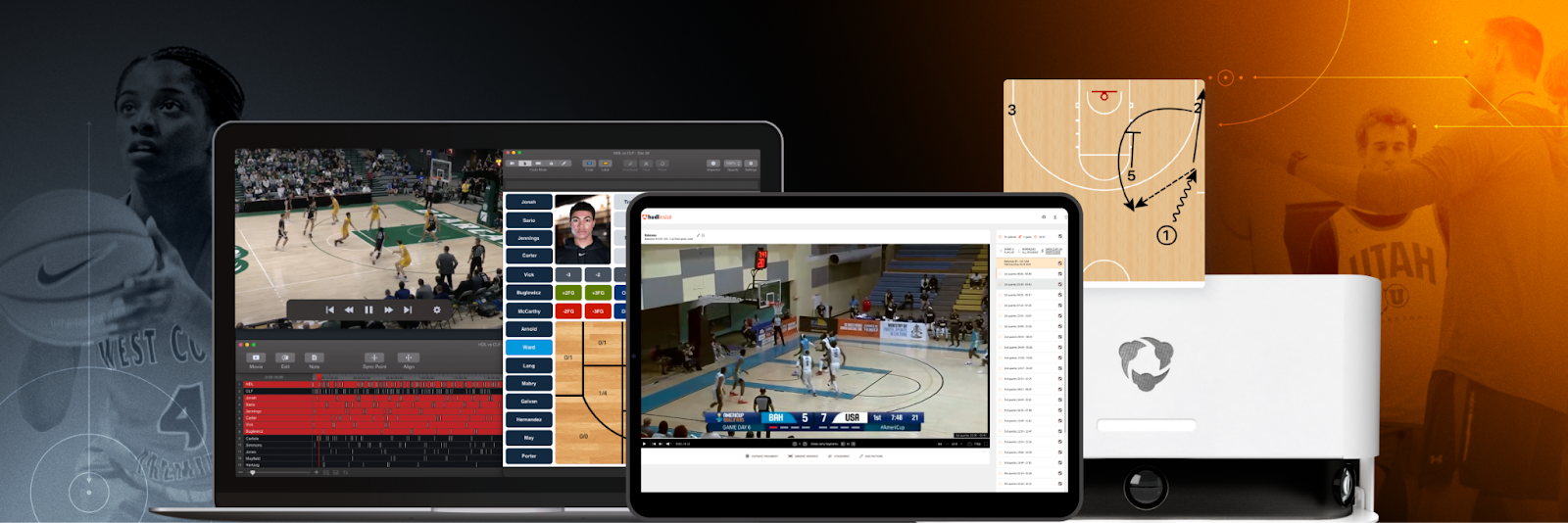
Hudl Powers Every PossessionIf you’re already using tools like FastDraw, FastScout, or FastRecruit—you know how essential they are to your workflows. And now that they’re fully part of the Hudl ecosystem, they’re more powerful than ever. From film and play diagrams to scouting reports and custom recruiting boards, everything flows together. One system. Built for high-performance programs. Learn more about Hudl and their variety of products or subscribers to Slappin' Glass can also directly email Winston Jones of Hudl at winston.jones@hudl.com. Tactical📺 Ghost Flare - Skip DHO • Veer Screen "Sending multiple decoy actions at the defense to set up a veer screen for a shooting forward." ✚ Pair With: A few more well-executed ATOs to exploit the low help defender with a skip pass to an uphill DHO. 🔒 SG Plus Content: Our "Film Room" study with Coach Jimmie Oakman on "Dead Corner" solutions. 📺 5 Out Offense - Shallow Cut • Veer Screen "A deceptive cutting action to shallow cut a shooter into the veer screen." ✚ Pair With: A quick hitting flare screen against the nail help in the 5 Out alignment. 🔒 SG Plus Content: Our breakdown on Utah Jazz Head Coach Will Hardy's use of the Top Flare in 5 Out Spacing.
Interesting Reads📚 1% Better: 10 Ideas That Changed My Life in 2025 People often say, "Showing up is half the battle." 📚 Skip Short Strolls – A Longer Daily Walk is Better for Your Heart, Says Study Co-lead researcher Prof Emmanuel Stamatakis said: "We tend to place all the emphasis on the number of steps or the total amount of walking but neglect the crucial role of patterns, for example 'how' walking is done. "This study shows that even people who are very physically inactive can maximise their heart health benefit by tweaking their walking patterns to walk for longer at a time, ideally for at least 10-15 minutes, when possible." 📚 Why Your Team Needs a Failure Party (Yes, Really) A few teams I’ve worked with have done just that. They gather every quarter—yes, in person if possible, complete with snacks, music, and maybe even a glass of wine—and throw what they call a “learning party.” The mood is festive, the energy is supportive. And the structure is simple. Each person shares one thing that didn’t go as planned. A campaign that underperformed. A missed opportunity. A misjudged hire. And then, critically, they share what they learned from it. Quote of the Week
"The most treasured gifts in the world are kind words spontaneously tendered." - Jim Collins
Thank you for reading and have a great week coaching, Dan, Pat, and Eric info@slappinglass.com |
Slappin' Glass
Exploring basketball's best ideas, strategies, and coaches from around the world.
Exploring basketball's best ideas, strategies, and coaches around the world Happy Sunday! Welcome to all the newest subscribers from around the world! ICYMI: Last week, we broke down how to force a late switch against Drop Coverage by having the screener race out of the screen, beat the on ball defender to the recovery point, and pivot into a seal. Read the newsletter HERE. This Week at a Glance: 🔒 SG Plus Content: Coaches Roundtable - The Ready Up 🧪 The Practice Lab: What Are You Working On?...
Exploring basketball's best ideas, strategies, and coaches around the world Happy Sunday! Welcome to all the newest subscribers from around the world! ICYMI: Last week, we explored Baldur Ragnarsson’s contact drills and Drew Dunlop’s variable movement Ready Ups in the Practice Lab, looking at how to prepare players to stay balanced, adapt through contact, and find solutions from unfamiliar positions. Read the newsletter HERE. This Week at a Glance: 🔒 SG Plus Content: Forcing the Late Switch -...
Exploring basketball's best ideas, strategies, and coaches around the world Happy Sunday! Welcome to all the newest subscribers from around the world! ICYMI: Last week, we released our third quarter SG Intelligence Report, looking at the concepts coaches kept coming back to across SG, from Hedge & Plug and late-game defense to randomized offense and ICE solutions, and what those repeat views might tell us about the problems coaches are trying to solve right now. Read the report HERE. This...