🏀 Small Adjustments, Major Impact
|
Exploring basketball's best ideas, strategies, and coaches around the world Happy Sunday! Welcome to all the newest subscribers from around the world! ICYMI: Last week, we took a look at those tricky deep corner inbound situations and highlighted a few concepts and actions teams are using to find success. Read the newsletter HERE. This Week at a Glance:🔒 SG Plus Content: Ballscreen Adjustments - Tougher Overs & Late Rolling 🎧 Slappin' Glass Podcast: Evan Miyakawa 📣 Hudl Instat & Dr. Dish 🥇 Best of the Week: 5 Out Delay & Post Trigger 📚 Interesting Reads: Hands-On Leadership But first... Got a coaching question? Ask us! We’re excited to launch our new Monthly Mailbag on YouTube, created to bring the Slappin' Glass community directly into the conversation and dive into the real coaching questions you're wrestling with. Each month, we’ll feature and answer selected questions in a dedicated YouTube video, covering anything from tactics and team concepts to podcast guests, leadership, or broader coaching topics. Submit your question below, and keep an eye out for our first episode dropping right after the holidays!
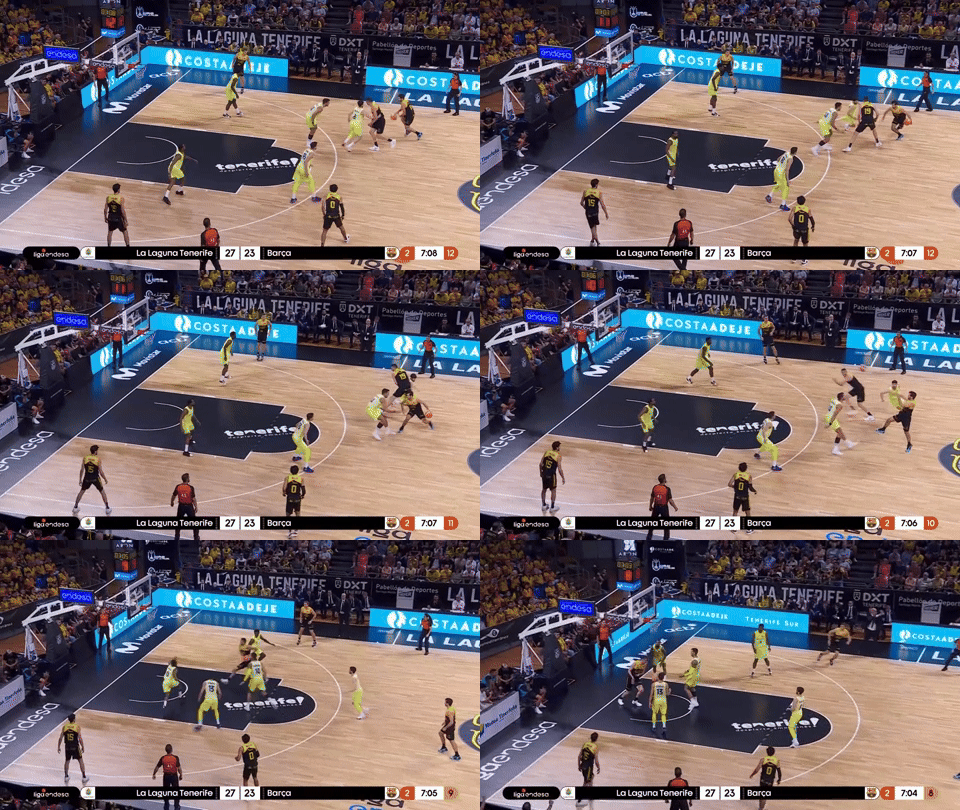
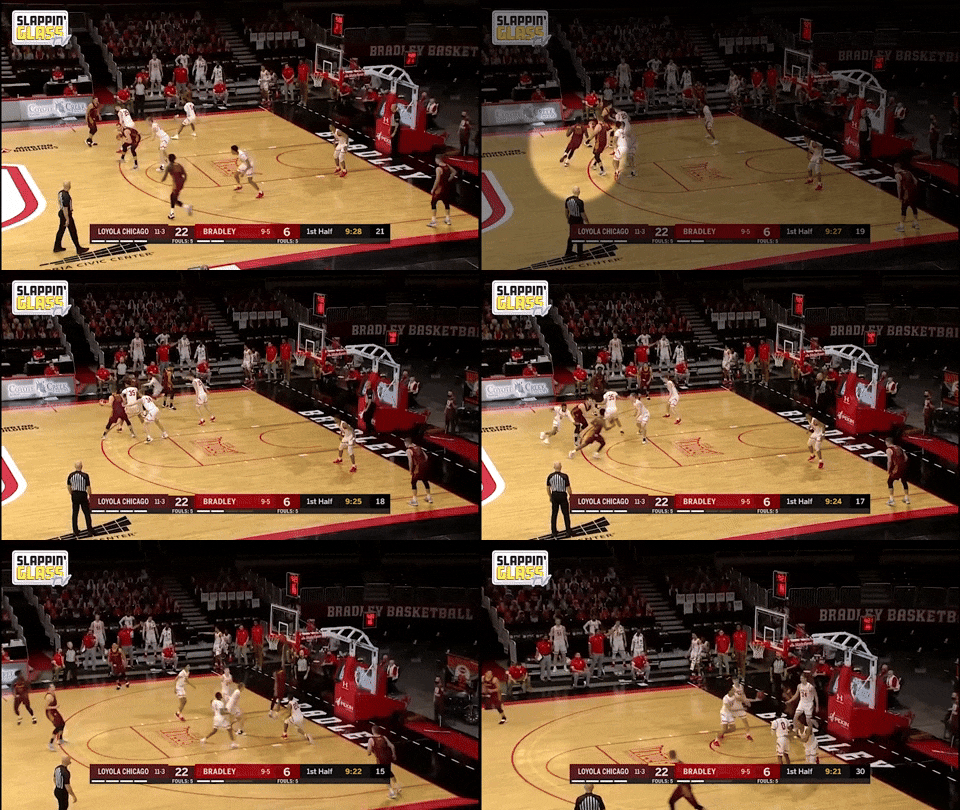
Adjusting UpSometimes, gaining an advantage offensively comes from introducing an entirely new concept the defense hasn’t seen or prepared to guard. Other times, especially mid-season, it’s about a micro-adjustment, a subtle detail that can create outsized impact or even transform an action entirely. Recently, we highlighted one of those defensive details: jumping on the ballhandler’s pickup in the ballscreen {🔒} to add an extra punch to the coverage. This week, we’re turning to the offensive side and breaking down a ballscreening detail that's easy to miss the first hundred times you watch it, but once you see it, it's hard to unsee it. It’s a small maneuver after contact on the screen that widens space for the handler and amplifies the advantage on the roll, creating a far more potent PNR attack. We call it “adjusting up.” What Is "Adjusting Up?"Adjusting up refers to a slight uphill movement by the screener after contact is made. It is subtle, usually just a small hop, before heading downhill toward the rim.
Zooming In: The key point of emphasis with this ballscreen adjustment is the screener’s ability to adjust the screen by hopping, moving both feet together in a coordinated action rather than lunging with a single side step to tag the defender at the last moment. These micro hops have multiple uses, and we have explored them in the past as effective tools for creating advantages in off ball screening {🔒} and in handoffs {🔒}. The intent behind adjusting up in the ballscreen is twofold. First, it creates a tougher “over” for the on ball defender. By shifting the screen a few inches higher, the defender is forced to cover more ground to recover back to the ball. That small adjustment provides the ballhandler with greater separation and valuable time coming off the screen. Second, with the extra time and space, the handler can string the big out in the coverage while moving into a wider and more favorable passing angle. With the on ball defender now stuck chasing over the screen, the defensive big must square up to corral the ball. At the same time, the screener’s brief uphill adjustment prevents an early roll, allowing the space in front of the action to open so the pocket pass can be delivered cleanly. When To Use An Adjust UpWhile the extra time and space created by the tougher over benefits the ballhandler, this strategy is especially suited for an offense that wants to feature a rolling big. It is particularly useful against dropped coverage when the offense does not have the athletes to attack the big at the rim with the ballhandler or does not want to settle for repeated midrange shots. In these situations, the screener should be cued to stick and hold the screen, using the adjustment to create a more advantageous short roll window. *Note: This extra space for a pocket pass is similar to the gap created by another subtle screening adjustment we've covered in the past, the "Hot Stove Screen" {🔒}. Ride the OverIn the wide range of movements that occur on a basketball court, this particular technique may still be unfamiliar to many coaches and players. The common instinct for most screeners is to begin moving early or to extend an extra appendage or two in an attempt to steer the defender over the screen. While elite screeners do use a slight uphill movement, the core technique is an immediate hop backward upon contact. As the screener absorbs the contact, they ride the momentum of the defender fighting over to hop up and backward. This deepens the adjustment angle and also helps communicate to the official that the action is a legal play. Surely several of us will be thinking about the legality of the action and the chance of an offensive foul being called. The key to keeping this play clean is the screener staying square on contact before making the adjustment up. The screener must set a firm low angle screen, just as they would in any ballscreen setting, and only after the defender creates the over by running into the pick does the screener build on the advantage with the adjustment up. Disclaimer: Slappin Glass accepts no responsibility for any illegal screen violations that may follow, nor are we claiming this technique as universal truth. Our only purpose is to share what we find interesting and highlight how coaches around the world are finding success. So much of offensive success comes down to small details repeated with purpose. This simple adjustment is another example of how a minor movement can consistently tilt a possession in your favor. To continue studying this technique, SG+ Plus members can now view the complete breakdown on SGTV! Together with Dr. Dish Imagine having your team’s entire development, training, and analytics in one place. That’s the Dr. Dish Training Management System — T-M-S — the ultimate coaching platform that transforms your shooting machine into a complete player-development engine. Track every rep, drill, and player. Assign custom workouts. View heat maps, leaderboards, and progress across your entire roster — all in one dashboard. Build accountability. Unlock smarter reps. And take full control of your team’s growth. Feed Your Fire at drdishbasketball.com. 🎧 Evan Miyakawa on Preventing the "Kill Shot", Useful vs. Interesting Analytics, and Deciphering Lineup DataThis week on Slappin’ Glass, we’re joined by data scientist and creator of the rapidly growing college basketball analytics platform EvanMiya.com, Evan Miyakawa. Evan’s work has become a trusted resource for coaches at every level—particularly those looking to cut through the noise of early-season statistics and understand which metrics actually matter. In this conversation, Evan shares how coaches can separate interesting numbers from useful ones, why certain teams have unique statistical fingerprints that predict success, and how lineup data can be leveraged far more effectively than most programs currently use it. We also unpack defensive priority stats (threes, rim, free throws), halftime box score interpretation, and the origins of Evan’s “kill shot” metric—his way of measuring and predicting momentum swings across a season. Whether you’re analytics-comfortable or analytically curious, Evan offers a clear, practical roadmap for applying data without drowning in it. What You’ll Learn1. How to Separate Useful Analytics from Interesting NoiseWhy the highest-value decisions come from combining coaching intuition with clean, well-adjusted data—not relying fully on either side. Evan explains how to weigh early-season sample sizes, refine priors, and avoid overreacting to statistical outliers. 2. Identifying the 2–3 Metrics That Predict Your Team’s SuccessTeams often win and lose in repeatable ways. Evan shows how programs can isolate their own “keys to victory,” giving coaches clarity on what truly influences outcomes and what should drive practice and game-planning priorities. 3. Making Better Lineup Decisions (and Avoiding the Small-Sample Trap)Learn why 30 possessions can reveal a spark worth exploring, why 100+ possessions create real confidence, and how properly adjusted lineup data helps identify combinations that elevate—or limit—your team. 4. How to Read a Halftime Box Score with Meaningful PurposeA practical framework for assessing which stat pairings matter most and how to determine whether discrepancies at halftime signal a real issue or simply reflect pace and game context. 5. Prioritizing Defensive Outcomes: Threes, Rim, Free ThrowsA breakdown of how these three defensive outcomes interact, why no team can eliminate all of them every night, and how understanding opponent tendencies can simplify what your defense should prioritize. 6. The “Kill Shot”: Understanding and Predicting Momentum RunsEvan explains his 10–0 run metric—why preventing opponent runs is more predictive of elite performance than generating them—and why the duration of a run often tells the true story of a game’s momentum. 7. Coaching the Moments Around RunsActionable insights on timeout usage, recognizing schematic breakdowns, and managing emotional swings so you can stop a slide early or create momentum without burning resources unnecessarily. Evan’s work reminds us that analytics aren’t meant to replace coaching instincts—they’re meant to sharpen them. By focusing on the metrics that truly matter, understanding lineup signals, and managing the moments that swing games, coaches can make faster, more confident decisions throughout the season. His insights offer a practical blueprint for turning numbers into competitive edges, one possession at a time.
Together with Hudl
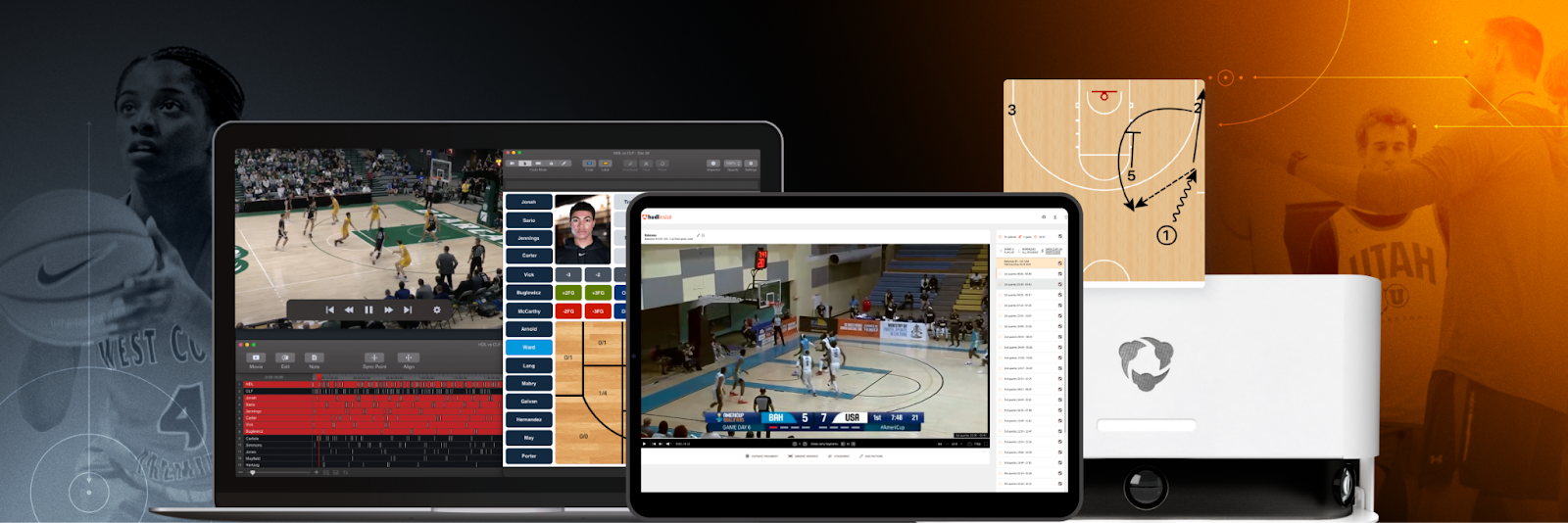
Hudl Powers Every PossessionIf you’re already using tools like FastDraw, FastScout, or FastRecruit—you know how essential they are to your workflows. And now that they’re fully part of the Hudl ecosystem, they’re more powerful than ever. From film and play diagrams to scouting reports and custom recruiting boards, everything flows together. One system. Built for high-performance programs. Learn more about Hudl and their variety of products or subscribers to Slappin' Glass can also directly email Winston Jones of Hudl at winston.jones@hudl.com. Tactical📺 5 Out Delay - Over • Stagger Zoom "Creating a gap for the ballhandler in the Zoom DHO by sending the 45 cutter over the top of the big into a stagger screen." ✚ Pair With: Incorporating a flex screen out of a 5-Out Delay catch. 🔒 SG Plus Content: Coach Mark Pope’s use of multiple bigs within the 5-Out Delay.
📺 Post Trigger - Dunker Pin Screen "A few clever ways to use the post touch as the trigger to pin down screen the opposite dunker." ✚ Pair With: The Italian NT using the point guard to trigger action out of the post. 🔒 SG Plus Content: Our "Film Room" session with Grace College, Stephen Halstead, on post efficiency and exploiting mismatches in the post. Interesting Reads📚 Live a Disciplined Life, Spontaneously The most alive people aren’t the most spontaneous or the most disciplined, they’re the ones who’ve made discipline a second skin, so they can live in flow without falling apart. They don’t need to try to be spontaneous, their life is built to allow it. Their time isn’t micromanaged; it’s well-guarded. Their mind isn’t reactive; it’s clear. Their environment isn’t chaotic; it’s supportive. 📚 The Surprising Success of Hands-On Leaders These leaders reject the logic of transformation—the idea that performance improves through occasional, heroic interventions. They don’t aim for one-shot breakthroughs. They build systems, habits, and norms that make improvement the standard business, practiced every day. 📚 The Unspoken Skill of Finesse For years, I’ve been fascinated with the topic of good judgment. You could give 10 operators the same primary data, and they’d potentially come up with 10 different recommendations of varying quality. Quote of the Week
“A step backward, after making a wrong turn, is a step in the right direction.” - Kurt Vonnegut
Thank you for reading and have a great week coaching, Dan, Pat, and Eric info@slappinglass.com |
Slappin' Glass
Exploring basketball's best ideas, strategies, and coaches from around the world.
Exploring basketball's best ideas, strategies, and coaches around the world Happy Sunday! Welcome to all the newest subscribers from around the world! ICYMI: Last week, we broke down how to force a late switch against Drop Coverage by having the screener race out of the screen, beat the on ball defender to the recovery point, and pivot into a seal. Read the newsletter HERE. This Week at a Glance: 🔒 SG Plus Content: Coaches Roundtable - The Ready Up 🧪 The Practice Lab: What Are You Working On?...
Exploring basketball's best ideas, strategies, and coaches around the world Happy Sunday! Welcome to all the newest subscribers from around the world! ICYMI: Last week, we explored Baldur Ragnarsson’s contact drills and Drew Dunlop’s variable movement Ready Ups in the Practice Lab, looking at how to prepare players to stay balanced, adapt through contact, and find solutions from unfamiliar positions. Read the newsletter HERE. This Week at a Glance: 🔒 SG Plus Content: Forcing the Late Switch -...
Exploring basketball's best ideas, strategies, and coaches around the world Happy Sunday! Welcome to all the newest subscribers from around the world! ICYMI: Last week, we released our third quarter SG Intelligence Report, looking at the concepts coaches kept coming back to across SG, from Hedge & Plug and late-game defense to randomized offense and ICE solutions, and what those repeat views might tell us about the problems coaches are trying to solve right now. Read the report HERE. This...