🏀 What We’re Listening For at the SG SoCal Summit
|
Exploring basketball's best ideas, strategies, and coaches around the world Happy Sunday! Welcome to all the newest subscribers from around the world! ICYMI: Last week, Last weekend’s newsletter looked back at six standout sessions from previous SoCal Summits, highlighting the ideas and teaching points that have helped shape the event. Read the newsletter HERE. This Week at a Glance:🔒 SG Plus Content: 2026 Summit Primer - What We're Listening For 🎧 Slappin' Glass Podcast: Pat Juckem 🔑 The Practice Lab: Stride Stops & Getting Unstuck 🥇 Best of the Week: Pistol PNR But first... 📣 Slappin' Glass SoCal Summit!The Slappin’ Glass SoCal Coaches Summit returns August 15th to sunny Southern California, presented by Hudl. A full day of on-court teaching, film, and coaching conversation, bookended by two hosted Coaches Socials. SG+ member can get an invite to the private clinic. If you are interested in attending...
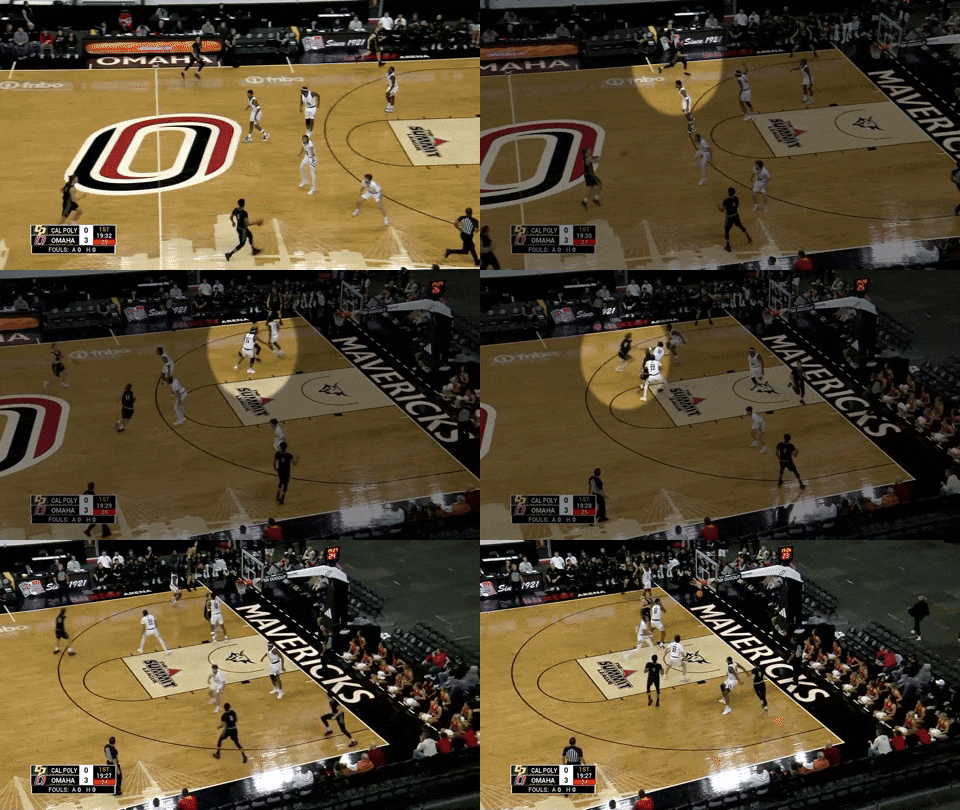
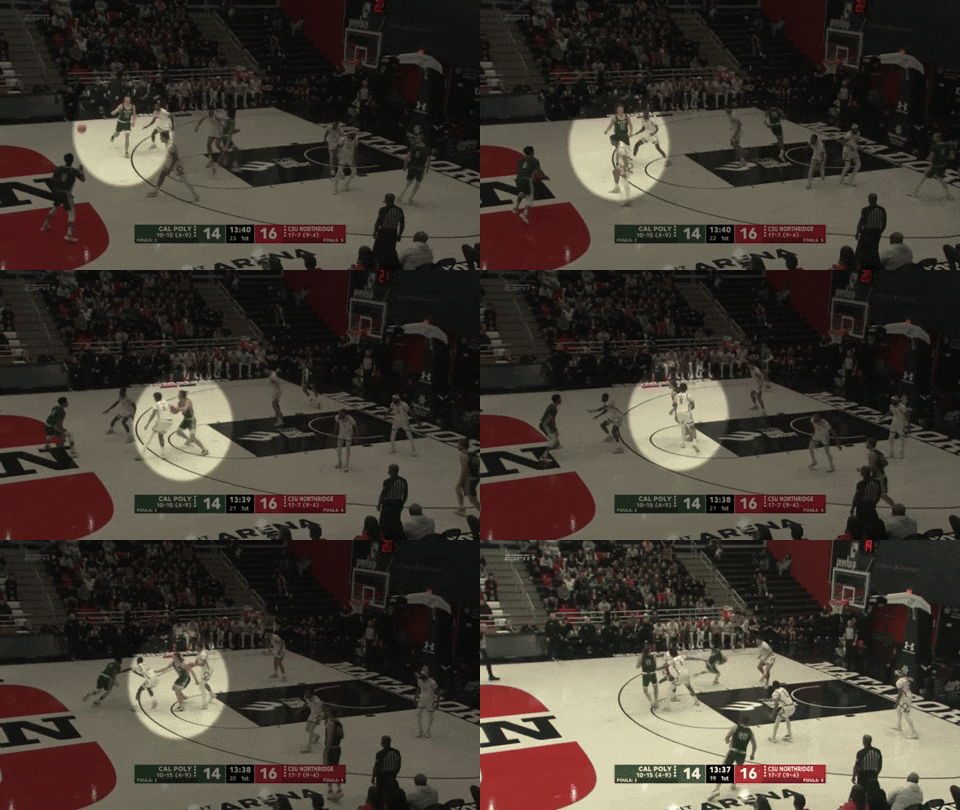
What We’re Listening For at the SG SoCal SummitSix coaches. A few ideas worth revisiting before Saturday. In less than a week, six coaches will take the floor at the Slappin’ Glass SoCal Summit. Several have joined us on the podcast or in the Film Room, and some of what they’ll present Saturday builds directly on conversations we’ve been thinking about for a while. So, before the Summit, we went back through some of that work. Here are a few ideas worth revisiting and what we’ll be listening for next. SG SoCal Summit Schedule - Saturday, August 15, 2026Mike Magpayo | Fordham University Kyle Bossier | Cal Poly SLO Alex Pribble | University of Idaho Matt Majkrzak | Northern Illinois University Tim Fanning | BYU Martin Schiller | University of Utah Mike Magpayo: From Data to DecisionsSmart Wins: Analytics, Language, and Principles of Play Mike Magpayo has long been known for the level of detail behind how his teams prepare and play. The 2023 Big West Coach of the Year and 2026 NABC Guardian of the Game Award winner has also developed a reputation for his use of analytics. What interests us is how he gets that information onto the court. There is no shortage of data available to coaches. The harder part is deciding what actually deserves to influence the way a team teaches, talks, practices, and plays. Saturday, Magpayo will dig into that connection between analytics, language, and principles of play. What We’re Listening ForWhich numbers does Magpayo believe are worth coaching? And once he identifies something useful, how does he turn it into language players can actually use? Kyle Bossier: Creating Space Through MovementPlaying the Beautiful Game: Pace, Space, and Positionless A few weeks before last year’s Summit, Coach Bossier joined us in the Film Room to break down Cal Poly’s “4 Out, 1 on the Move” offense. Instead of permanently assigning one player to the dunker spot, Cal Poly keeps the fifth player moving through the interior. Squeeze cuts, Corner Loops, Empty-Outs, and other movements clear players off the perimeter, shift the defense, and return the offense to its preferred spacing.
Create the Gap Before the DriveOne detail we liked was how much work happens before the ballhandler attacks. On the Squeeze, the player at the 45 cuts early, creating the double gap while also occupying the low defender. Now the ballhandler is attacking space that the offense helped manufacture. Stay With the AdvantageCal Poly also has an answer when a ballscreen gets switched or steered. Rather than immediately moving on, the screener can slip out and return with a “Check” screen, giving the offense another opportunity to get the screening angle it wanted in the first place.
Finish the CutBossier also spent time on what happens after a player gets to the rim. Stay inside too long and the next drive loses its space. The cutter has to read whether there is an opportunity to hang briefly around the dunker or whether it is time to exit and reopen the floor. Those details are part of what makes Saturday’s topic interesting. “Pace, Space, and Positionless” isn’t only about playing faster or standing farther apart. A lot of it happens through the timing and movement of the four players without the ball. What We’re Listening ForHow does Bossier keep five players connected without over-scripting the offense? And how much of Cal Poly’s spacing is created before the ballhandler ever attacks? 🔒 Watch the Cal Poly Film Room with Coach Bossier → [LINK] Alex Pribble: Building Belief Through ClarityProgram Building: 5 Decisions that Impact Improvement When Coach Pribble joined the podcast, much of our conversation centered on simplifying the work that goes into building a program. A few ideas stuck with us. Build BeliefPribble talked about identifying culture carriers, establishing consistent systems, and staying with the process long enough for expectations inside the program to begin changing. A rebuilding program eventually has to move from talking about what it wants to become to expecting those standards every day. Make Roles ClearOne of the more practical ideas was how his staff handles player roles. Each player’s role, responsibilities, and areas for growth are consolidated into a one-page outline. Players leave with a clear understanding of what the team needs from them and where their development should be focused. Build Systems That Give Time BackPribble’s staff also uses detailed checklists and recurring processes around recruiting, scouting, fundraising, and player development. The benefit is straightforward: less time recreating operational work and more time available for film, teaching, and relationships. What We’re Listening ForPribble will narrow program building down to five decisions Saturday. We’re interested in which five made the cut and which parts of running a program he believes coaches spend too much time worrying about. Listen to our conversation with Coach Pribble → [LINK] Matt Majkrzak: Freedom Through StructureScripted Subbing: Balancing Rotations and Offensive Playcalling One of our most popular podcast conversations from the past year centered on Coach Majkrzak’s approach to scripting games. He scripts six offensive calls for each four-minute segment and connects those calls to planned lineups and substitution patterns. The goal is to give the staff and players clarity before the game starts without locking them into the plan once it does. Match the Calls to the LineupMajkrzak builds the offensive script around the personnel expected to be on the floor. Each group enters with actions it has prepared, allowing the staff to match the offense to the strengths of that particular lineup. Substitutions and play calling become part of the same plan. Give Players a RunwayPlayers generally know when they’re likely to enter, how long their stint may last, and which actions they’ve prepared for that window. That clarity can reduce some of the pressure to immediately manufacture something when checking into the game and give players a better chance to settle into their minutes. Get Off the ScriptThe other side of the system is knowing when the plan no longer fits the game. If an opponent begins pressing, zoning, switching, or hard hedging, Majkrzak is willing to move away from the planned calls and stay with the advantage the defense is giving up. What We’re Listening ForHow far does Majkrzak take the scripting? And what tells him it’s time to get off it? Listen to our conversation with Coach Majkrzak → [LINK] Tim Fanning: Building Identity FastDefense First, Identity Fast: Takeaways from a Gold Medal Summer Coach Tim Fanning and the U18 Netherlands National Team went 8–0 on their way to a gold medal this past summer at FIBA EuroBasket. What caught our attention was how quickly that group had to establish what it wanted to be. International basketball compresses the teaching window. There are only so many coverages, habits, and situations a staff can get to before the games begin. For Fanning and the Netherlands, the defensive end became a priority. Saturday, we’ll hear more about what they chose to emphasize during that 8–0 run and how they built an identity without the benefit of a long preseason. What We’re Listening ForWhat went in first? What did Fanning decide the Netherlands had to be good at defensively—and what did they decide they could live without? Martin Schiller: Building PNR DefenseBuilding PNR Defense Through Advanced Shell Drills When Coach Schiller joined us in the Film Room, we looked at ballscreens mostly from the offensive side. What stood out was how specifically he thought about the coverage he expected to see. Against a hedge, the screener released quickly to create separation and open the 4-on-3. Against a short show, the screener stayed connected longer so the ballhandler could turn the corner. One idea from later in the Film Room is especially relevant to what he’ll present Saturday. Schiller discussed using specific calls early in the season to deliberately teach counters players weren’t ready to recognize on their own. As players saw those situations repeatedly, the calls could eventually become automatics. Saturday he’ll attack the ballscreen from the other side, showing how he builds PNR defense through advanced shell drills. What We’re Listening ForHow does Schiller progress his shell work once players understand the base coverage? What changes when the offense begins altering spacing, screening angles, and actions? 🔒 Watch Coach Schiller’s Film Room → [LINK] See You SaturdaySix coaches, six different approaches, and plenty for us to steal, question, and think about. Request your invitation to the 2026 Slappin’ Glass SoCal Coaches Summit → [JOIN SG+] The Learning LoopThoughts from Drew Dunlop in building The Practice LabA player can be standing in the “correct” spot and still be poorly spaced if the ball cannot reach them. Practice Lab UpdateAfter last week’s section on creating stride stop solutions by removing a step, a few coaches asked to see the drill. So this week, we posted it to the Practice Lab. {🔒} That’s the goal of the Practice Lab. We share what we’re working on, coaches respond, and sometimes that feedback determines where we go next. And now, one brick, one takeaway, one tinker... BrickWe talk a lot about spacing. Where should each player stand? How wide should the corners be? When should someone lift, drift, or replace? But knowing where to stand and knowing how to become available are two different skills. During a live 3v3 segment this week, the ballhandler picked up their dribble under heavy pressure and immediately needed help. The other two offensive players appeared to be spaced correctly. One was in the corner and the other was lifted above the break. If we had stopped the possession and drawn it on a whiteboard, it probably would have looked fine. But the ballhandler had nowhere to pass. Both off-ball players stayed in their “proper” spots while their defenders sat directly between them and the ball. They were technically spaced, but functionally unavailable. My first reaction was to look at the ballhandler. Could they have kept the dribble alive? Protected it better? Escaped the pressure? Those were fair questions, but the bigger problem was away from the ball. I had spent plenty of time teaching players how to maintain spacing and not enough time helping them understand how to create a passing window once that spacing was taken away. TakeawayBecoming available requires more than relocating to the next spot. The off-ball player has to recognize that the ballhandler is in trouble, read how their defender is positioned, and find a way to create access to the ball. Sometimes that means lifting or drifting. Sometimes it’s cutting behind the defender’s head. Sometimes it’s stepping into the defender before separating. Sometimes it’s moving three feet at the right time. A player can be standing in the “correct” spot and still be poorly spaced if the ball cannot reach them. So instead of only asking: “Are you in the right spot?” I’m starting to ask: “Can the ball get to you?” We wouldn’t teach a player to set a good ballscreen by simply standing near the defender. The angle, timing, pace, and interaction with the defender all matter. TinkerNow I’m thinking about how to make off-ball window creation more visible inside our small-sided games. Rather than prescribing a specific cut, I’m interested in amplifying the problem: How do you create access to the ball when your defender is committed to taking that access away? One idea is rewarding the action before the catch. If an off-ball player creates a window that allows a trapped teammate to escape pressure, maybe that earns a point even if the possession doesn’t end in a basket. We could also manipulate the ballhandler’s problem. Maybe they have to pick the ball up after two dribbles. Maybe the defense earns an extra point for forcing a dead dribble. We spend a lot of time teaching players where to stand. I want to spend more time helping them learn how to get found. Together with Hudl Preparation Wins Before Tip-OffThe staffs that hit the ground running in preseason are usually the ones that prepared their systems before players arrived. With Sportscode and FastModel already dialed in, film, playbooks, and scouting workflows are ready from day one—not still being built in week two. What you set up in August determines how efficiently you can teach, adjust, and prepare once the season begins. Hudl helps make sure the work is ready before the real work starts. Learn more at hudl.com/slappinglass Subscribers to Slappin' Glass can also directly email Winston Jones of Hudl at winston.jones@hudl.com. 🎙10 Lessons from Pat JuckemThis week’s podcast with WashU Head Coach Pat Juckem covered a lot of ground, but most of it came back to a central question: What are we actually building into our players every day? From practice design and scoring systems to role clarity, shot quality, and transition defense, here are 10 ideas we loved from the episode:
The common thread: if something really matters to your team, it should probably show up somewhere in the way you practice. Listen to the full conversation now on the Slappin’ Glass Podcast.
Together with the NABC If you’re a basketball coach, you belong in the NABC community!The NABC is the leading professional development and advocacy organization for coaches, serving over 5,000 members across all levels of basketball. Why join? Members gain access to the NABC Convention and regional clinics, exclusive awards and mentoring opportunities, valuable discounts, and a voice in shaping the future of basketball. If you're serious about growing as a coach and staying connected to the game’s biggest conversations, this is where you belong. Become a member today and make your impact as a Guardian of the Game. Learn more HERE. Tactical📺 Pistol PNR - Throwback • Stampede "Throwing the ball back to a dynamic ballhandler to trigger a downhill stampede attack, using the pistol ballscreen to pull the big away from the rim." 🔒 Pair With: A ghost screen entry to initiate the Pistol PNR, creating early confusion and space for a dynamic guard off the ballscreen. 🔒 Pair With: Popping the screener high off the entry action to create space to sprint and slip the follow up Pistol ballscreen. 🔒 SG Plus Content: Our breakdown on the value and effectiveness of shortening the pass back to the middle third with a stampede catch in step up screen dominant offenses.
Interesting Reads📚 Excellence in Coaching: The Art and Skill of Elite Practitioners . . . that practice sessions epitomize the skill and art of the coach. . . . that it is imperative that to enhance athlete performances in competition, training sessions must include situated authentic playing experiences. . . . that the key to orchestrating the large number of variables when planning and executing training sessions depends on the extent to which the coach can contextualize their sport knowledge and understanding to suit their own unique practice situations. 📚 Pat Lam: ‘I See Myself Not Only Fighting the System but Trying to Beat the System’ Fundamental to any enterprise, in other words, is the concept of reliable individuals pulling in the same direction. “If you’re going to take any of these international jobs it’s about saying: ‘Here’s the main team but are they coming from winning environments? Are the S&C [strength and conditioning] and medical departments working together?’ Then you’ve got half a chance. You’ve got a conveyor belt going, a bit of pride and all that stuff. That’s why New Zealand rugby was always strong. Everything was geared towards making the All Blacks successful.” Most nations run a version of Brazil’s model – spot the gift early, build the pathway around the position a child is presumed to suit already – and it has produced some of the most beautiful football played. But Norway’s success is a prompt to ask whether the alternative, protecting a child’s right to choose, may be the better pathway. It may be rare to legislate patience. It is rarer still to win by doing it. Quote of the Week
“Action produces information. If you’re unsure of what to do, just do anything, even if it’s the wrong thing. This will give you information about what you should actually be doing. Sounds simple on the surface – the hard part is making it part of your every day working process.” - Brian Armstrong
Thank you for reading and have a great week coaching, Dan, Pat, Eric, and Drew info@slappinglass.com |

Slappin' Glass
Exploring basketball's best ideas, strategies, and coaches from around the world.
Exploring basketball's best ideas, strategies, and coaches around the world Happy Sunday! Welcome to all the newest subscribers from around the world! ICYMI: Last week, we released our third quarter SG Intelligence Report, looking at the concepts coaches kept coming back to across SG, from Hedge & Plug and late-game defense to randomized offense and ICE solutions, and what those repeat views might tell us about the problems coaches are trying to solve right now. Read the report HERE. This...
Exploring basketball's best ideas, strategies, and coaches around the world Happy Sunday! Welcome to all the newest subscribers from around the world! ICYMI: Last week, we wrapped up our SoCal Summit clinic releases with Mike Magpayo on using analytics and feedback to reinforce what matters, and Tim Fanning on building defensive identity through clear rules and habits. Read the newsletter HERE. This Week at a Glance: 🔒 SGTV: Offensive Intelligence Report {April-June} 🧪 The Practice Lab: What...
Exploring basketball's best ideas, strategies, and coaches around the world Happy Sunday! Welcome to all the newest subscribers from around the world! ICYMI: Last week, we featured two different approaches to pace and offensive organization. Matt Majkrzak on scripting rotations, pace, and play calls. Kyle Bossier on Cal Poly’s Beautiful Game built around pace, space, connection, and player freedom. Read the newsletter HERE. This Week at a Glance: 🔒 SG Plus Content: Mike Magpayo and Tim...