🏀 Johnny Tauer on Intrinsic Motivation
|
Exploring basketball's best ideas, strategies, and coaches around the world Happy Sunday! Welcome to all the newest subscribers from around the world! ICYMI: Last week, we released Miami Heat Assistant Coach Eric Glass' clinic replay on the foundations of excelling as an assistant, what players often lack at higher levels, and how to hunt weak defenders. Read the newsletter HERE. This Week at a Glance:🔒 SG Plus Content: Johnny Tauer - Intrinsic Motivation 🎧 Slappin' Glass Podcast: Justin Bokmeyer {Brooklyn Nets} 📣 Hudl Instat & Dr. Dish 🥇 Best of the Week: Ricky Screens & Horns 4 Out 📚 Interesting Reads: Rethinking "Potential" Let's dive in... Intrinsic MotivationOver the past few months, we’ve been rolling out clinic replays from our 2025 SoCal Coaches Summit. To close out the series, we feature Johnny Tauer, head coach at the University of St. Thomas, where he also serves as a professor of psychology. Coach Tauer brings a rare dual perspective, grounded both in championship-level coaching and academic research, as he explores Intrinsic Motivation. His talk draws on lessons from leading St. Thomas’ transition from Division III to Division I and from decades studying what drives people to perform at their best. In his session, Tauer unpacks how coaches can recruit, identify, and measure intrinsic motivation within their teams. He challenges the idea that coaches can “create” motivation, emphasizing instead that great programs select and nurture players who already love the game. By understanding the science of motivation Tauer provides practical frameworks for building teams that sustain effort and joy from within. Core Principle: Situations And Motivation"In social psychology, premise number one is "situations are powerful."" Tauer cites the famous Milgram Experiment, which demonstrated how ordinary people could be led to act in completely uncharacteristic ways when placed in the right (or wrong) situation. While that study revealed the dark side of situational influence, Tauer’s point is the opposite: the same principle can be leveraged for good. Coaches can intentionally design environments that bring out the best in their players. When players are consistently encouraged, empowered, and rewarded for doing the right things, the result is a compounding effect of positive behavior. Every team culture either nurtures or suppresses intrinsic motivation, and it’s rarely neutral. Talent matters, but the environment ultimately determines whether that talent flourishes or fades. Recruiting Intrinsically Motivated Players“If you’re trying to motivate people day after day after day, that’s going to be really hard.” While coaches can design environments that allow intrinsic motivation to thrive, one variable remains stubbornly resistant to correction: players with little or no internal drive. As Tauer reminds us, you can’t rewire a player’s motivation, no matter how much you’d like their goals to perfectly mirror your own. True drive can’t be installed. That’s why recruiting intrinsically motivated players is essential. Rather than trying to manufacture motivation day after day, great programs select and surround themselves with people who already love the game, those who compete, learn, and work for reasons deeper than external rewards. So how can coaches spot players who are motivated for all the right reasons on the recruiting trail? Coach Tauer offers several strategies for identifying the “right” kind of players: 1. Watch actions, not words. 2. Ask revealing questions. 3. Talk to unbiased sources. 4. Look for coachability. 5. Observe family dynamics. Measuring Intrinsic MotivationOnce you’ve recruited players who possess a strong internal drive, the next challenge is building an environment that sustains it, and knowing how to measure it. The work isn’t over just because you’ve brought intrinsically motivated players through the door. Drawing back on the power of environments, Tauer cautions that if coaches aren’t intentional, the very structure of a program, its rewards, feedback, and tone, can slowly erode the motivation they worked so hard to recruit. Rigid control, inconsistent standards, or a lack of trust can shift players from wanting to work to having to work. While intrinsic motivation can feel abstract, Tauer emphasizes that, like culture or leadership, it can be assessed through consistent observation and feedback. Coaches can track both behavioral and attitudinal indicators {🔒} to get a real sense of what’s happening beneath the surface of their environment. Final Takeaways For Coaches
“You’ll get tired of teaching ballscreen defense,” Tauer concluded, “but you won’t get tired of coaching human beings.” For much more insights and context on Intrinsic Motivation, SG+ members can watch the full replay of Coach Tauer's session now on SGTV! Together with Dr. Dish Imagine having your team’s entire development, training, and analytics in one place. That’s the Dr. Dish Training Management System — T-M-S — the ultimate coaching platform that transforms your shooting machine into a complete player-development engine. Track every rep, drill, and player. Assign custom workouts. View heat maps, leaderboards, and progress across your entire roster — all in one dashboard. Build accountability. Unlock smarter reps. And take full control of your team’s growth. Feed Your Fire at drdishbasketball.com. 🎧 Justin Bokmeyer on Structures for High Performance Environments, the Value of Pre-Mortems, and Systems Thinking {Brooklyn Nets}This week on Slappin’ Glass, we sit down with Justin Bokmeyer, Director of Basketball Operations for the Brooklyn Nets, to explore how great teams build sustainable, high-performance environments. With a background spanning West Point, MLS Next, and the NBA Academy, Justin shares powerful lessons on leadership, systems thinking, and developing people-first organizations that thrive under pressure. 🧠 What You’ll Learn
🔁 Key Quote “High performance is a people-first business. Get the right people in the right roles, and everything else follows.” Tune in to learn how the Brooklyn Nets’ Justin Bokmeyer blends leadership, decision science, and culture-building to create environments where teams can grow, compete, and sustain excellence.
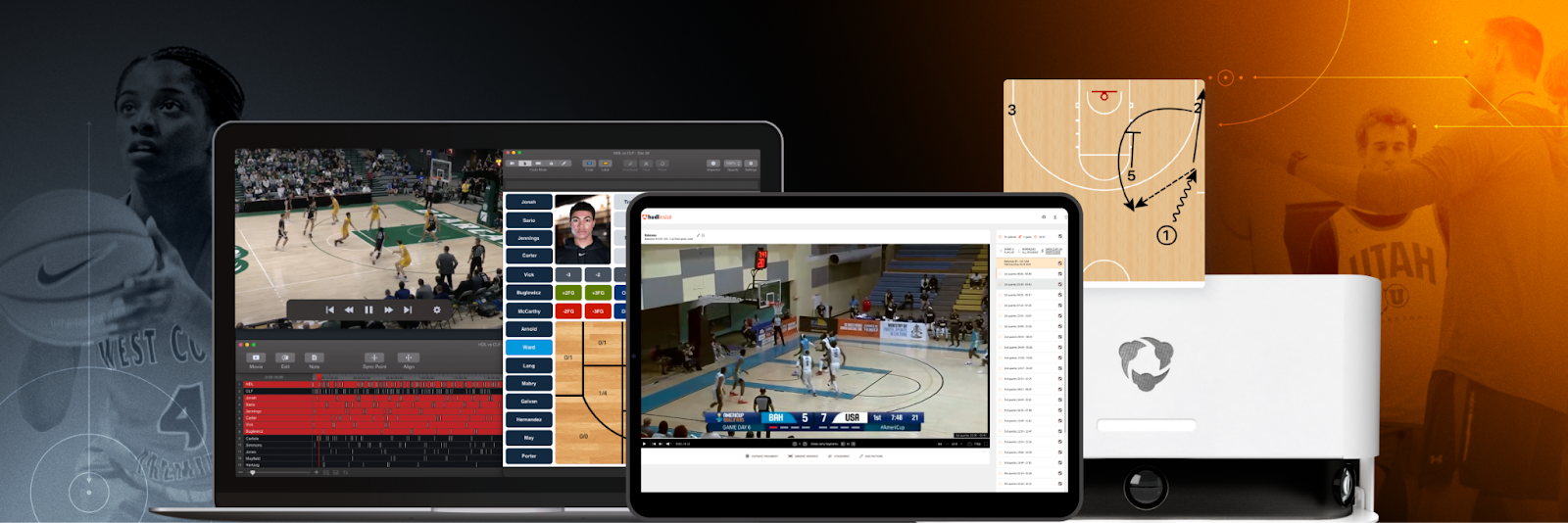
Together with Hudl
Hudl Powers Every PossessionIf you’re already using tools like FastDraw, FastScout, or FastRecruit—you know how essential they are to your workflows. And now that they’re fully part of the Hudl ecosystem, they’re more powerful than ever. From film and play diagrams to scouting reports and custom recruiting boards, everything flows together. One system. Built for high-performance programs. Learn more about Hudl and their variety of products or subscribers to Slappin' Glass can also directly email Winston Jones of Hudl at winston.jones@hudl.com. Tactical📺 Horns Entry - Flare • Ricky Screen "Punish the defense going under the Flare Screen with an immediate rescreen." ✚ Pair With: Ricky Screen variations out of the Iverson Entry. 🔒 SG Plus Content: Our recent breakdown on attacking low tags out of the Horns Entry with a weakside Pindown Screen. 📺 4 Out - RIP • Zoom DHO • Flare 4 "We’ve enjoyed watching Coach Igor Kokoškov back in Europe with Efes, one of the best in the game when it comes to set designs and ATOs." ✚ Pair With: A few of our favorite 4 Out sets around a RIP Screen and playing to a shooting 4-Man. 🔒 SG Plus Content: Our breakdown on weaponizing a shooting big man with a Flare Screen from the top in 5 Out transition spacing. Interesting Reads📚 In Command Being “in command” doesn’t mean you’re always popular. It means you’re willing to make tough decisions, even if they’re not always well-received, because they’re in the best interest of the customer, the team, and the business. On the other hand, when your mentality and habits are elite, your potential becomes exponential. You’re not limited by what you currently can do — you’re actively creating what’s next. You are actively growing your potential every day. 📚 What Advice Do I Give to My Students? Let go of the ego – it’s not about you (even when it’s apparently about you). Science is based on criticism, that’s how it goes. Everyone is fighting their own battle, and has their own stressors that affect how they respond to your material. Don’t spend any time trying to figure out who feels what way about you. It doesn’t matter and it’s not personal. Just focus on bringing the community the best product you can bring. Don’t dwell on the negative or keep grudges.- Copied from thoughtforms.life Quote of the Week
“Knowing and knowing what to do about it were two different things.” - Richard Russo
Thank you for reading and have a great week coaching, Dan, Pat, and Eric info@slappinglass.com |
Slappin' Glass
Exploring basketball's best ideas, strategies, and coaches from around the world.
Exploring basketball's best ideas, strategies, and coaches around the world Happy Sunday! Welcome to all the newest subscribers from around the world! ICYMI: Last week, we broke down how to force a late switch against Drop Coverage by having the screener race out of the screen, beat the on ball defender to the recovery point, and pivot into a seal. Read the newsletter HERE. This Week at a Glance: 🔒 SG Plus Content: Coaches Roundtable - The Ready Up 🧪 The Practice Lab: What Are You Working On?...
Exploring basketball's best ideas, strategies, and coaches around the world Happy Sunday! Welcome to all the newest subscribers from around the world! ICYMI: Last week, we explored Baldur Ragnarsson’s contact drills and Drew Dunlop’s variable movement Ready Ups in the Practice Lab, looking at how to prepare players to stay balanced, adapt through contact, and find solutions from unfamiliar positions. Read the newsletter HERE. This Week at a Glance: 🔒 SG Plus Content: Forcing the Late Switch -...
Exploring basketball's best ideas, strategies, and coaches around the world Happy Sunday! Welcome to all the newest subscribers from around the world! ICYMI: Last week, we released our third quarter SG Intelligence Report, looking at the concepts coaches kept coming back to across SG, from Hedge & Plug and late-game defense to randomized offense and ICE solutions, and what those repeat views might tell us about the problems coaches are trying to solve right now. Read the report HERE. This...